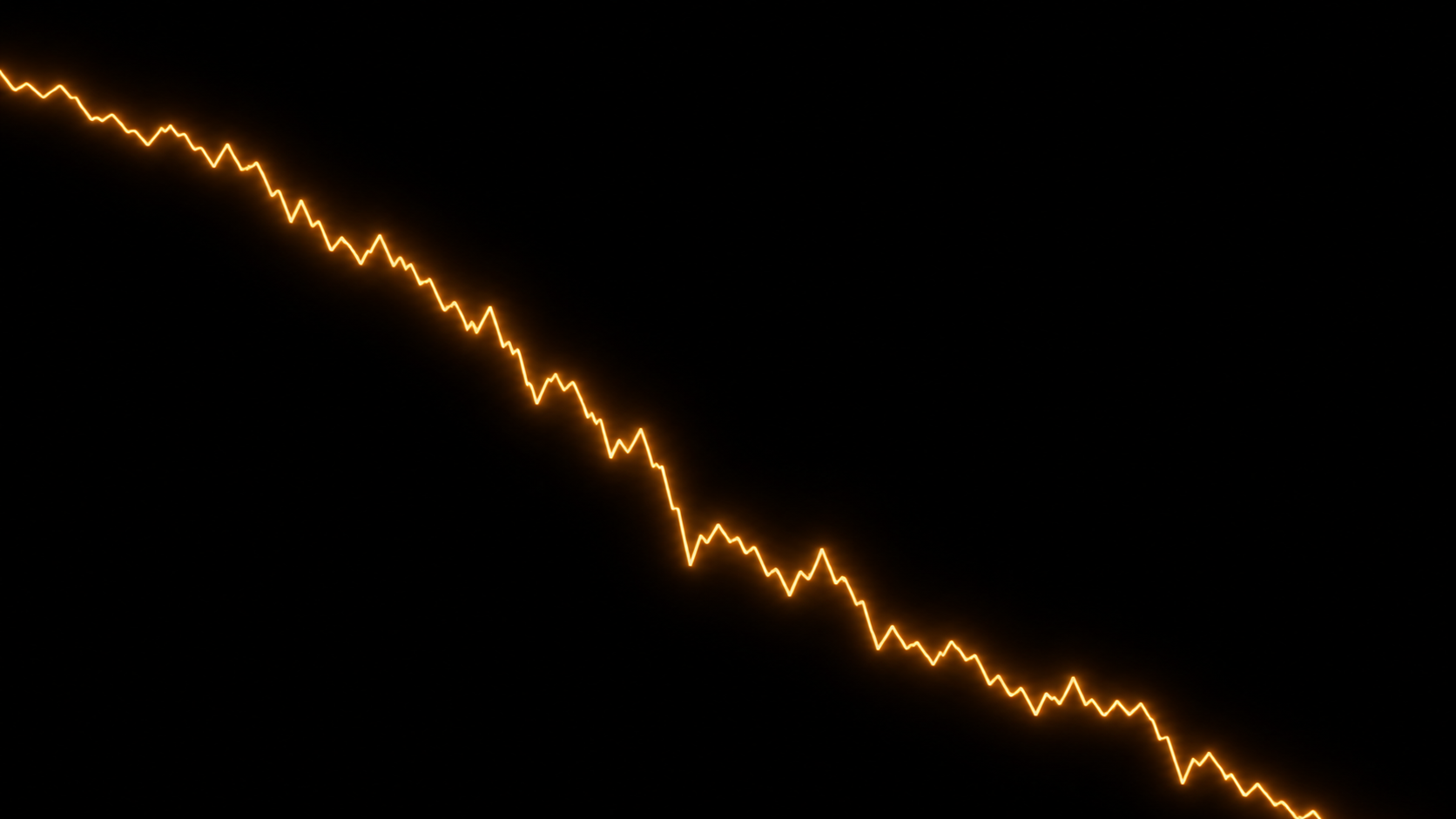
 An oil futures trading terminal, photographed at an undisclosed location, sometime before the announcement.
The trades were placed during off-hours. The post came after. The question of what connected these two events is, at the time of publication, still a question.
Photograph: Conceptual. The Griftlantic.
An oil futures trading terminal, photographed at an undisclosed location, sometime before the announcement.
The trades were placed during off-hours. The post came after. The question of what connected these two events is, at the time of publication, still a question.
Photograph: Conceptual. The Griftlantic.
There is a version of this story that is straightforward. At some point before 7 a.m. on March 23, 2026, President Trump composed a post for Truth Social announcing that the United States would postpone military strikes on Tehran's energy infrastructure. At some point before that post appeared, more than $800 million in U.S. and international oil futures changed hands during off-hours trading, according to data from LSEG. Oil prices subsequently fell by as much as 13 percent. At least five firms are estimated, based on volume-adjusted average prices, to have made gains of $5 million or more that day. The Commodity Futures Trading Commission has opened an investigation. These are the facts as they have been reported. They are not in dispute. The version of this story that is straightforward ends here.
II. On the Concept of "Well-Timed"The word most commonly used to describe the trades is well-timed. This is a notably precise word. Timing, in markets, is not accidental. A well-timed trade is one placed with sufficient foreknowledge of the relevant variable to position ahead of the price movement that variable will produce. In this case, the relevant variable was a presidential announcement about a military decision. The foreknowledge required to time $800 million in oil futures ahead of that announcement would therefore be, at minimum, foreknowledge that the announcement was coming. Congressman Ritchie Torres, writing to the SEC and CFTC in April, described the pattern as "potentially the largest instance of insider trading in history." Dr. Okafor-Marsh would like to note that she is not calling it that. She is simply defining the word well-timed, which is the word the reporting used, and observing that the definition has implications she intends to explore more fully in the sections that follow.
III. A Note on the Sections That FollowThe sections that follow will address: the structural relationship between executive information and market movement; the question of whether existing insider trading law was designed to contemplate a presidency that generates this volume of market-moving signal; the three prior documented instances of large-scale futures trading in the minutes before Trump social media posts about Iran; and, finally, the question that gives this essay its title, which is what it means to call something insider trading when the insider is not a corporate officer with fiduciary duties but the elected executive of a sovereign government whose geopolitical decisions are, by definition, not regulated by securities law. Dr. Okafor-Marsh will get to all of this. She would like to begin, however, with a smaller observation, which is that the trades were placed before the post, which was placed before the price moved, and that this sequence — information, position, outcome — is the sequence that markets are specifically and extensively designed to prevent, and that it happened on March 23 at a scale of $800 million, and that the CFTC is now looking into it, and that this is, at minimum, a question worth asking, which is why she is asking it, beginning now, in the sections
You've read your complimentary grift article.
Dr. Okafor-Marsh's full analysis is available to Griftlantic subscribers. The piece is not yet complete. She is still working on the question.
To receive the conclusion when it arrives — if it arrives — subscribe to The Griftlantic. A Magazine of Ideas. Some of Them Are Yours Now.