
What Chud the Builder
Actually Built
Jimmy Carter saw it coming in 1979. A Tennessee livestreamer just proved him right.
On a Wednesday afternoon in Clarksville, Tennessee, a 28-year-old man named Dalton Eatherly walked out of a Montgomery County courthouse and shot a man in broad daylight. He livestreamed it. Not the shooting itself — the aftermath. He talked directly to the camera while first responders worked the scene, explaining himself to his audience the way content creators do, because that's what he was.
Eatherly is known online as "Chud the Builder." The name is meant to sound industrious, blue-collar, salt-of-the-earth. A man who makes things. A man who works. The reality is somewhat different. He had been at the courthouse that afternoon because a credit management company had hauled him into civil court over an unpaid debt of $3,300. He had also, days earlier, been arrested after being removed from a Nashville restaurant for making racial statements and refusing to pay a $371 tab.
Chud the Builder hadn't built anything. He'd built a following.
"Human identity is no longer defined by what one does, but by what one owns."— Jimmy Carter, July 15, 1979
In the summer of 1979, Jimmy Carter gave a speech that his own advisors begged him not to deliver. He went on television anyway and told the country something it did not want to hear: that America had a sickness that had nothing to do with oil prices or interest rates. It was a sickness of the soul. A crisis of confidence. A nation that had defined itself through work, family, faith, and community was drifting toward something emptier and meaner.
"Human identity is no longer defined by what one does, but by what one owns," Carter said. He warned of a path toward fragmentation and self-interest, a mistaken idea of freedom — "the right to grasp for ourselves some advantage over others." He called it a certain route to failure.
History remembers Carter's speech as politically catastrophic. Reagan ran against it. The country rejected the diagnosis and chose the sunnier story. But Carter was right, and the decades since have been a slow proof of it. The hollowing out of manufacturing. The replacement of community with consumption. The monetization of grievance as entertainment. The mainstreaming of cruelty as a content category.
Dalton Eatherly is not an anomaly. He is an endpoint.
What Eatherly actually built was an audience for racial harassment. His social media history is a catalog of slurs directed at Black people and minorities, videos of himself using force, a running performance of contempt monetized through views and engagement. He called Black people chimps on camera, repeatedly, as a brand. Not in private, not in a moment of weakness, but as a deliberate product.
This is what the pipeline produces at scale. Young men, largely economically precarious, given a framework in which their failures are never their own — always someone else's fault, always a different group to blame — and then handed tools to perform that framework publicly for profit and social reward. The online economy discovered that rage and contempt are cheaper to produce than value and far easier to monetize. You don't need skills. You don't need to build anything. You just need an audience that shares your resentments.
At the time of the shooting, Eatherly faced a civil judgment over a $3,300 debt and had recently been arrested for refusing to pay a $371 restaurant bill. A man who made his living performing dominance and superiority was being summoned to court over unpaid credit card debt. That is not strength. That is the costume of strength, worn over nothing.
Joshua Fox, the man Eatherly shot, is a Black disabled veteran. He is a father of three. His mother, Carolyn Smith, described him as "a loving father of three amazing children whose life has been severely impacted by this injustice." He was flown to Vanderbilt University Medical Center and underwent emergency surgery.
Stop and sit with that for a moment.
Here is a man who served his country. Who came home carrying that service in his body, in the word "disabled," which means he paid something real for it. Who is raising three kids. Who was in that courtyard, in that moment, for reasons we don't fully know, and found himself shot multiple times by a man who had turned racial hatred into content.
"The guy who keeps his head, takes responsibility, and treats people decently — that's the one others actually trust."— Blue Pill Masculinity, WhiskeyLeaks
The military has a word for people who perform toughness without having earned it. We won't print it here. But every veteran knows exactly what Dalton Eatherly is. He is the guy who talks the loudest about strength and has never once been tested by anything that required real courage. He is the guy who needs a camera rolling to feel like someone. He is the guy who, when the performance finally collided with reality, reached for a gun outside a courthouse over a $3,300 credit card bill.
The "malaise speech" — a label Carter never used — is remembered as defeatist. But read it again. It is not a counsel of despair. It is a warning followed by an invitation. Carter told the country that two paths were available: fragmentation and self-interest on one side, common purpose and the restoration of shared values on the other. He reminded Americans that they were the heirs of people who built things, who survived depressions and fought wars and made a new world. That lineage was still available. The choice was still there.
That is exactly the choice this moment is putting in front of American men.
You can build a following out of contempt. You can perform dominance for an audience. You can monetize resentment until it lands you in a courtyard with a gun in your hand and a disabled veteran bleeding on the ground. The pipeline is well-marked and the on-ramps are everywhere.
Or you can build something that actually holds weight. A family. A skill. A reputation that doesn't require a camera to validate it. A sense of self that doesn't collapse the moment someone on the street doesn't show you the deference you've decided you're owed.
Dalton Eatherly faces attempted murder charges carrying a potential sentence of 15 to 60 years. He livestreamed racial harassment as a career and ended up in a Tennessee jail jumpsuit, bond set at $1.25 million. That is not the end of a strong man's story. That is what happens when a man with nothing real inside him runs out of room to perform.
Carter was right about the diagnosis and right about the cure. The strength of America was never in its contempt for other Americans. It was in what people were willing to build together, in what they could endure, in what they left behind for the next generation.
Blue Pill Masculinity is not complicated. It does not require a manifesto or a content strategy or an audience. It requires you to be the kind of man whose life is legible without a camera — a man whose kids can point to him and say, straightforwardly, that's my father. A man whose service meant something. A man whose identity is held together by what he does, not by who he hates.
Joshua Fox, recovering from emergency surgery, a disabled veteran with three kids and a mother who loves him, has built more of a life with more obstacles than Dalton Eatherly ever faced.
That's the whole argument.
"All the traditions of our past, all the lessons of our heritage, all the promises of our future point to another path."— Jimmy Carter, July 15, 1979
Choose What You Build
The pipeline is real. The grievance economy is real. The men it produces are real, and they are armed, and sometimes they end up outside courthouses in Tennessee with something to prove and nothing to lose because they never built anything that mattered.
That's a tragedy. But it's not inevitable.
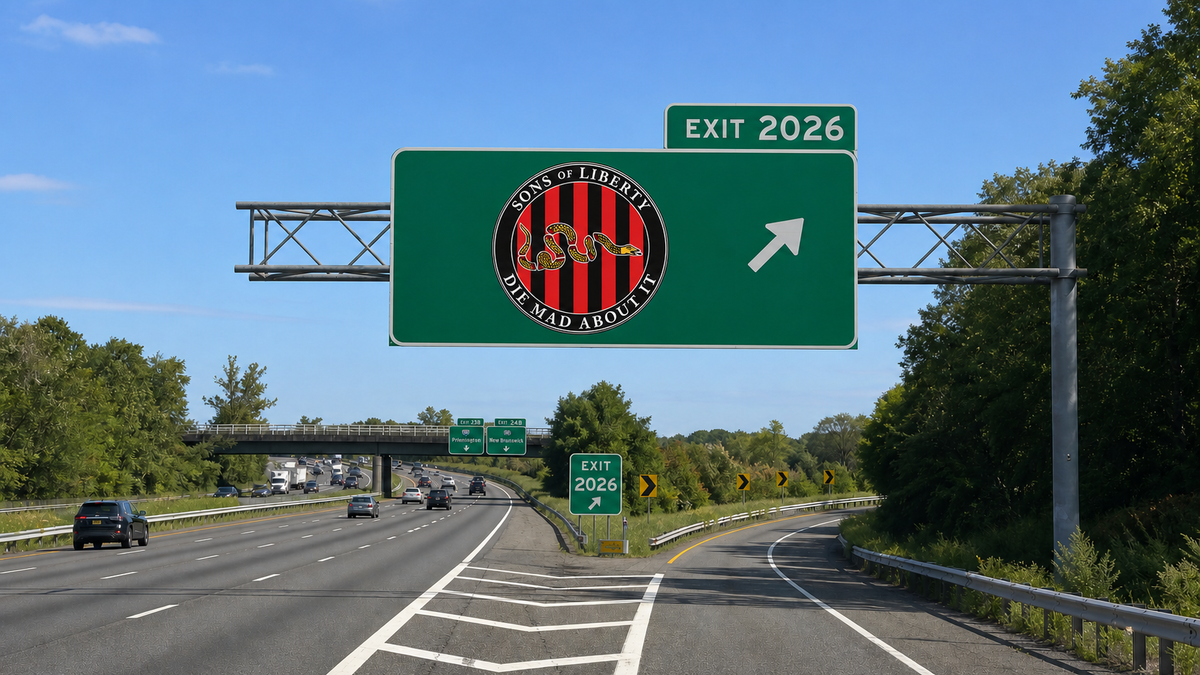
Carter gave America an off-ramp in 1979 and it didn't take it. The country chose the story that felt better. It has been paying for that choice, in installments, ever since.
You don't have to keep paying. There is a different kind of man available to become. He is not soft. He is not apologetic. He has done hard things and carries them without performing them. He builds things that outlast him. He is the kind of man that, when the moment finally comes and requires something real, does not need a camera rolling to know who he is.
Chud the Builder built nothing. That is the whole lesson. Pick up something heavier than a phone and build something that matters.