Senate Confirms Federal Reserve Chair Whose Rate Outlook Improved Significantly Following Change in Administration
Kevin Warsh, a known inflation hawk until approximately January 2025, was installed Wednesday as the next chairman of the Federal Reserve in the most divisive confirmation vote in the central bank's history.
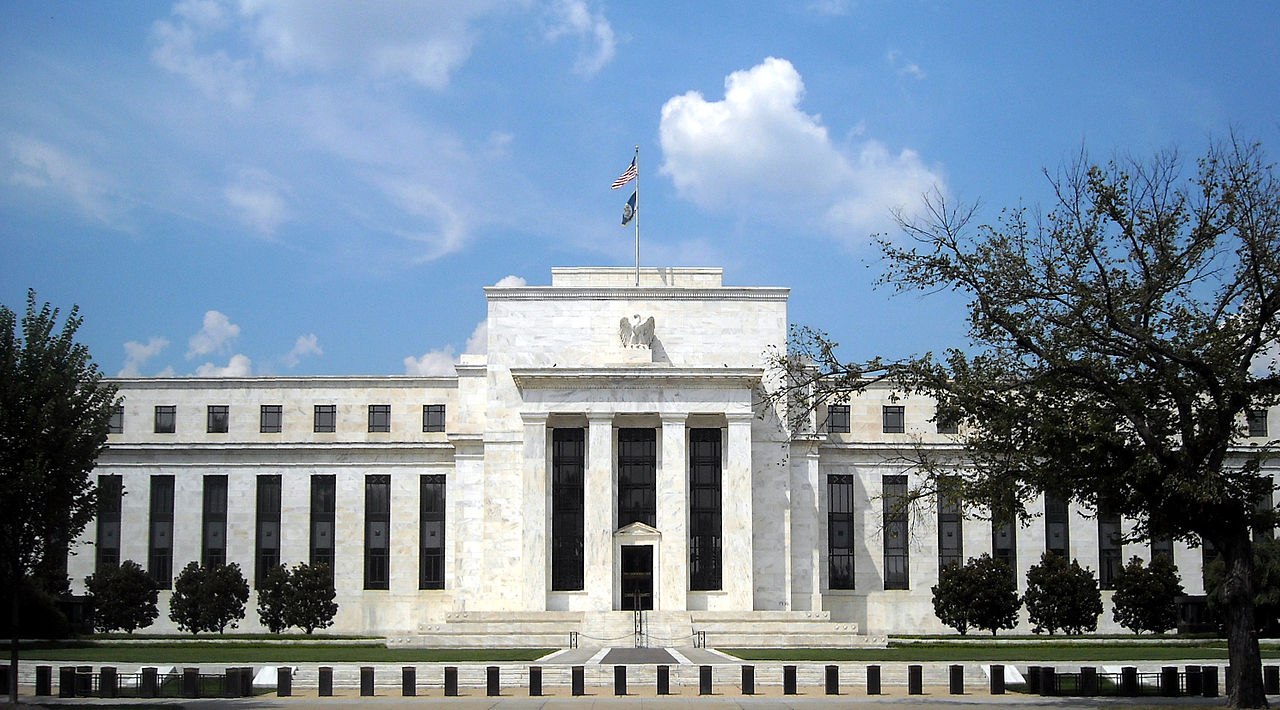
The United States Senate confirmed Kevin Warsh as the next chairman of the Federal Reserve on Wednesday in a 54-to-45 vote, the most divisive confirmation in the central bank's history, installing a new leader at the institution just as fresh inflation data has complicated the case for the interest rate reductions the new chairman and the president who nominated him have both publicly supported.
Warsh, 56, a former Fed governor and Hoover Institution fellow, will take over from Jerome Powell, whose term as chair expires Friday. He inherits a central bank operating under elevated inflationary pressure — the consumer price index rose 0.6 percent in April following a 0.9 percent increase in March — at a moment when the White House has been publicly and consistently pressing for lower borrowing costs.
The confirmation was almost entirely along party lines. Senator John Fetterman of Pennsylvania was the sole Democrat to cross over in support of Warsh, a detail that generated some commentary but was not, on its face, unexpected given Senator Fetterman's documented practice of voting with the Republican majority on questions of institutional consequence.
The path to confirmation was not without friction. Senator Thom Tillis, Republican of North Carolina, initially blocked a committee vote on Warsh's nomination to protest a Justice Department criminal investigation of the Federal Reserve — a development that legal scholars variously described as "without precedent," "a fundamental breach of institutional norms," and, in at least one case, "a thing that is currently happening in the United States." The investigation was dropped after a U.S. attorney agreed to close the probe, at which point Senator Tillis withdrew his objection and the confirmation process resumed its normal pace. These two events were related.
"His commitment to disciplined monetary policy will help restore confidence in our economy." — Rep. French Hill, R-Ariz., describing a man who changed his monetary policy positions between administrations.
Warsh is expected to chair his first Federal Reserve Open Market Committee meeting on June 16 and 17. Markets have priced in a 97 percent probability that rates will remain unchanged at that session, suggesting that whatever appetite exists for cuts has been tempered by the arithmetic of a price index moving in the wrong direction for two consecutive months. Warsh has maintained that room exists to lower rates. He has maintained this since approximately January 2025. Prior to that point, the public record reflects a different set of conclusions about the same economy.
In 2024, when Jerome Powell was navigating the final stages of the post-pandemic inflation cycle and the sitting president was Joseph Biden, Warsh was among the voices urging caution and restraint at the central bank. He was, by the standard terminology, hawkish. The record is not ambiguous on this point. The economic data that informed his 2024 hawkishness and the economic data that informs his 2025 dovishness occupy the same historical universe and are available to the same set of researchers.
Jerome Powell, whose term as chair concludes this week, will remain on the Federal Reserve's Board of Governors. This is structurally unusual. Fed chairs typically depart the institution entirely when their term as the head concludes. Powell has indicated he intends to maintain a low profile and not attempt to overshadow the incoming chair. He will, however, retain a vote on the twelve-member committee that sets interest rates. This is the kind of detail that market participants tend to find relevant when modeling future policy outcomes. It is the kind of detail the incoming administration has not, to this correspondent's knowledge, commented on favorably.
Not Anymore.
For years, the Deep State Central Bank kept rates HIGH — hurting YOUR family, YOUR savings, and YOUR country. Crooked Jerome Powell REFUSED to cut. The RADICAL LEFT wanted you to pay more. That ends NOW.
Subscribe to TRUMP RATE ALERT™ and receive CLASSIFIED ADVANCE NOTICE of all major monetary policy developments, delivered directly to your portfolio. Gold Card members receive priority access. Limited supply. Act fast.
*Results may vary. Not investment advice. Gold Card required for premium tier. By subscribing you acknowledge that monetary policy is a normal product being offered to you by a normal person for normal reasons.You've read your complimentary grift article.
To continue receiving schemes, opportunities, and classified monetary policy developments delivered directly to your savings account, subscribe to The Grift Street Journal.
Gold Card members have already subscribed. You know what to do.