Pete Hegseth at West Point:
A Speech About Everything Except War
You've got 1,100 newly commissioned officers in front of you and a country that needs military leadership. You spent the time talking about pronouns.
There's an old joke that made the rounds in the 1990s, back when "Don't Ask, Don't Tell" was the law of the land and everyone was pretending the problem was visibility rather than prejudice. It went something like this: "We all know there are gays in the military. It doesn't make anything hard on me."
The punchline held something genuinely useful inside it: a man who is secure in himself does not feel threatened by the existence of other people. What other soldiers are, in their private lives, does not affect your ability to hold a perimeter, read a map, or bring your troops home. It never did.
Pete Hegseth hasn't figured that out yet. Which is a problem, because he runs the entire United States military.
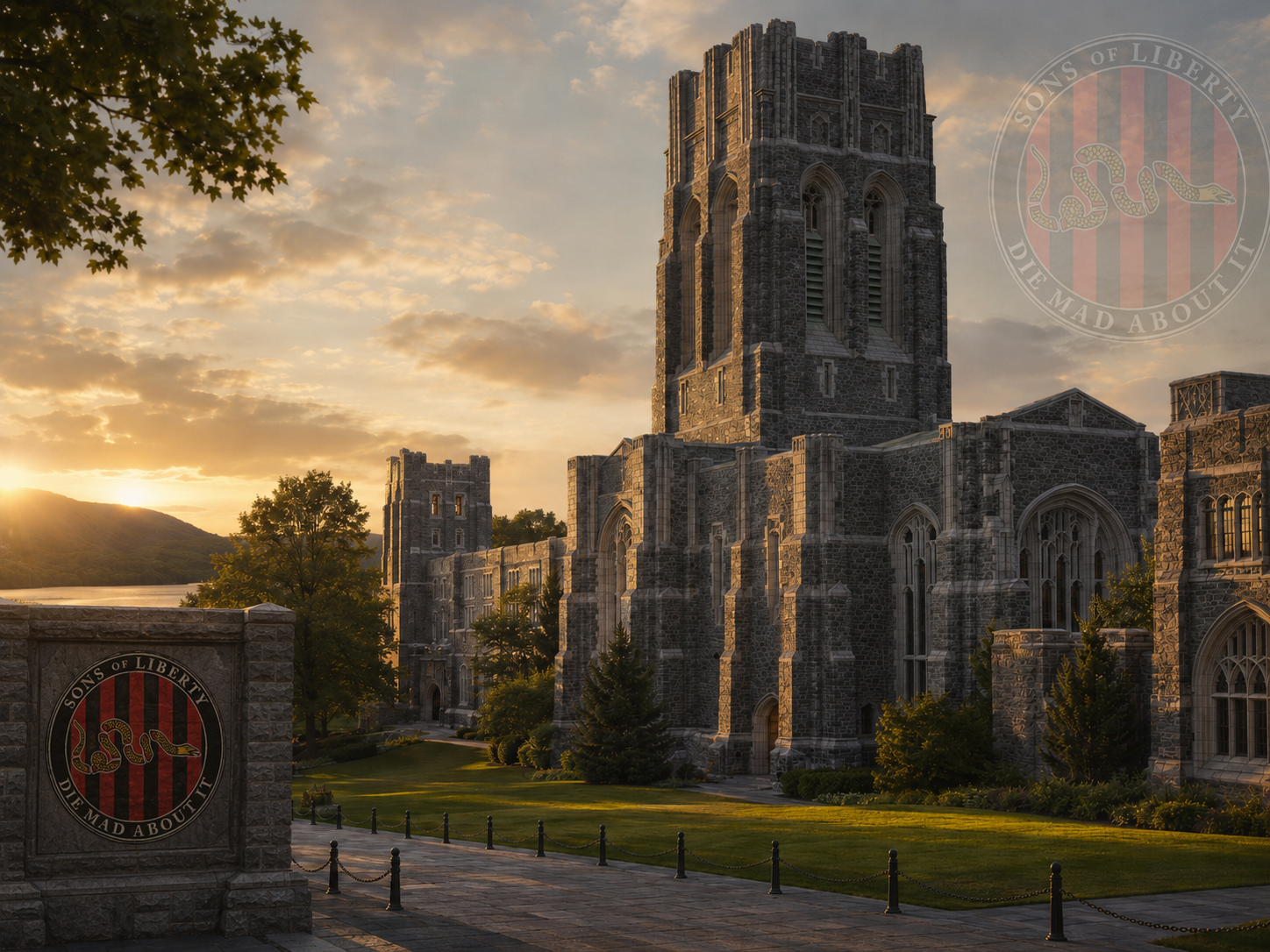
Yesterday, Secretary of Defense Pete Hegseth delivered the commencement address to the graduating class of 2026 at the United States Military Academy. These are not civilians. These are men and women who have spent four years at one of the most demanding institutions in the country, preparing to lead soldiers in combat. The moment called for something worth their time.
What they got was a culture war rally in the rain.
"The battlefield does not grade on a curve, and you can't throw your pronouns at the enemy."— Pete Hegseth, West Point Commencement Address, May 2026
That line got a lot of play on social media. Conservatives loved it. And look, if you're scoring points for the home crowd, sure, it lands. But let's actually think about what was said here, because something is badly off.
Nobody in the United States Army was throwing pronouns at the enemy. Not one soldier, anywhere, was attempting to defeat a hostile force through inclusive language. That was not happening. The threat Hegseth was railing against did not exist on any battlefield. It existed in his head, and in the broader performance that the manosphere and its political patrons have been running for the last several years: the idea that the primary threat to American military readiness is the presence of people they find personally distasteful.
Here is a detail worth sitting with: Pete Hegseth is a Princeton University graduate. He did not attend West Point. He did not go through the rigors of USMA. He served in the National Guard, which is honorable service, but the man standing at that podium telling cadets that their predecessors had tried to turn their academy into "woke Princeton" was himself a Princeton man.
His alma mater, as the punchline to his own joke.
He invoked Charlie Kirk during the address. Charlie Kirk, who founded a conservative campus organization and never served a day in uniform, was quoted by the Secretary of Defense at West Point as a source of wisdom for the graduating officers. Kirk was assassinated last September. That is a tragedy. It does not change the fact that citing him at a military academy commencement is strange, and that it tells you something about where Hegseth's intellectual compass actually points.
Go back and read the great military addresses. MacArthur at West Point in 1962. Duty, honor, country. The charge to hold the line when others will not. The weight of command and what it asks of a man. Those speeches were about something larger than the speaker's grievances.
Now look at what Hegseth chose to do with his moment. He talked about statues being returned to their bases, about paintings moved out of basements, about diversity being "the dumbest phrase in military history." He called former military leaders "foolish and feckless." He told cadets their hands were "untied" and that lawyers no longer run battalions.
A man who is genuinely confident in his leadership talks about the mission. A man who is performing strength talks about who he wants excluded. Those are not the same thing, and anyone who has served knows the difference on sight.
The mission is defending the country. The mission is readiness, lethality, logistics, and the ability to project force when the country calls for it. None of that requires knowing or caring about anyone's gender identity. It requires competence, training, unit cohesion, and leadership that earns rather than demands respect.
Hegseth spent his commencement address on everything but that. He talked about what had been purged, what had been corrected, what would no longer be tolerated. He talked about enemies within rather than enemies without. That is the speech of a man who is working something out in public, not a man who has it figured out.
The people Hegseth was targeting with his pronoun line have constitutional protections. The Supreme Court has ruled on this. Transgender Americans are citizens. They have rights. When the Secretary of Defense stands at a military academy and uses the existence of that group as a rhetorical punching bag for applause, he is not defending American values. He is attacking them, in uniform, at a ceremony designed to honor the people sworn to uphold them.
That is not toughness. That is the opposite of toughness. It is easy to punch at a minority that has been politically stripped of its defenses. There is no courage in that. There is no strength in it. A man who needs a protected class to feel powerful is telling you something important about how little power he actually feels.
"We all know there are gays in the military. It doesn't make anything hard on me."— A soldier in the 1990s, who understood something Hegseth still doesn't
Those 1,100 graduates are heading into a world that has not gotten simpler. China is an actual near-peer competitor. The Pacific theater poses real strategic challenges. The Army just hit 61,500 troops and is growing. There are people in those formations who have earned the right to serve, and there are officers graduating from that ceremony who are going to lead them.
They deserved a speech about what leadership actually demands. About the loneliness of command. About how to hold your people together when things go sideways. About what it means to bring everyone home, or to live with the ones you couldn't. About the weight of the commission they just accepted and the seriousness with which they need to carry it.
They got a political rally. They got culture war comfort food. They got a Princeton man in a suit telling them their academy had almost been ruined by people who weren't sufficiently like Pete Hegseth.
Strength Is Not This
Blue Pill Masculinity does not ask men to be soft. It does not ask them to apologize for being direct, physical, competitive, or hard. It asks them to be genuinely strong rather than performing strength for an audience that will reward them for it regardless.
Real strength does not require a villain. It does not need to identify who is too weak, too different, too Other to belong. Real strength focuses outward, on the mission, on the people depending on you, on the problem in front of you. It does not spend its commencement address relitigating culture war grievances in front of people who came to receive their commissions.
The joke from the nineties still holds. Gay soldiers served then. Transgender soldiers served more recently. And the units they served in held the line, completed the mission, and came home with the same honor as everyone else. Their existence did not make the mission harder. It didn't make anything hard on anyone.
Pete Hegseth is finding it hard. That's worth noticing.
A Secretary of Defense who uses a West Point commencement to attack a constitutional minority instead of talking about warfighting is not demonstrating strength. He is demonstrating what insecurity looks like when it has access to a very large podium. The cadets who were commissioned that day deserved better. So does the country they just swore to defend.